There are places you visit and places you feel. The Campo Santo de Yungay belongs to the second kind. It is the site where the old town of Yungay stood, buried on 31 May 1970 by an avalanche of ice, rock and mud that broke away from the Huascarán snow-capped peak after a magnitude 7.9 earthquake. Today it is a memorial of gardens, crosses, headstones and a Christ with open arms that invites silence. Knowing its history changes the way you look at the valley, which is why we wanted to tell it calmly, respectfully and with verifiable facts.
This guide brings together the history of Yungay before and after 1970, what happened that day, what was left standing, how the town was rebuilt and what is worth knowing in order to visit the Campo Santo respectfully. We have written it with the care a subject deserves that remains, for many families, an open wound.
A note of respect. The figures for victims and survivors vary by source, and each of them stands for people with names and families. Here we use ranges and point to the sources. If you visit the site, do so quietly and with sensitivity.
Yungay before 1970
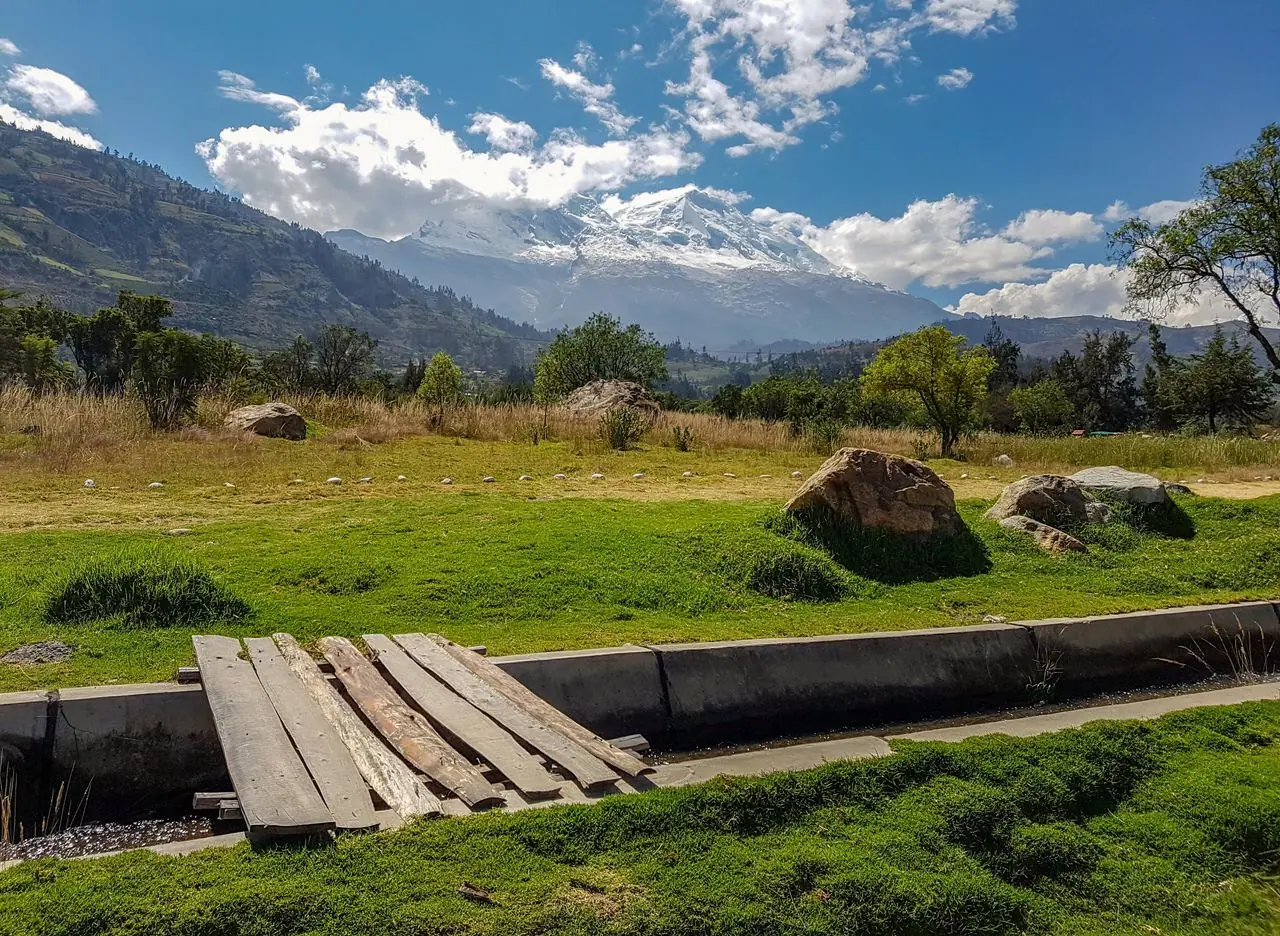
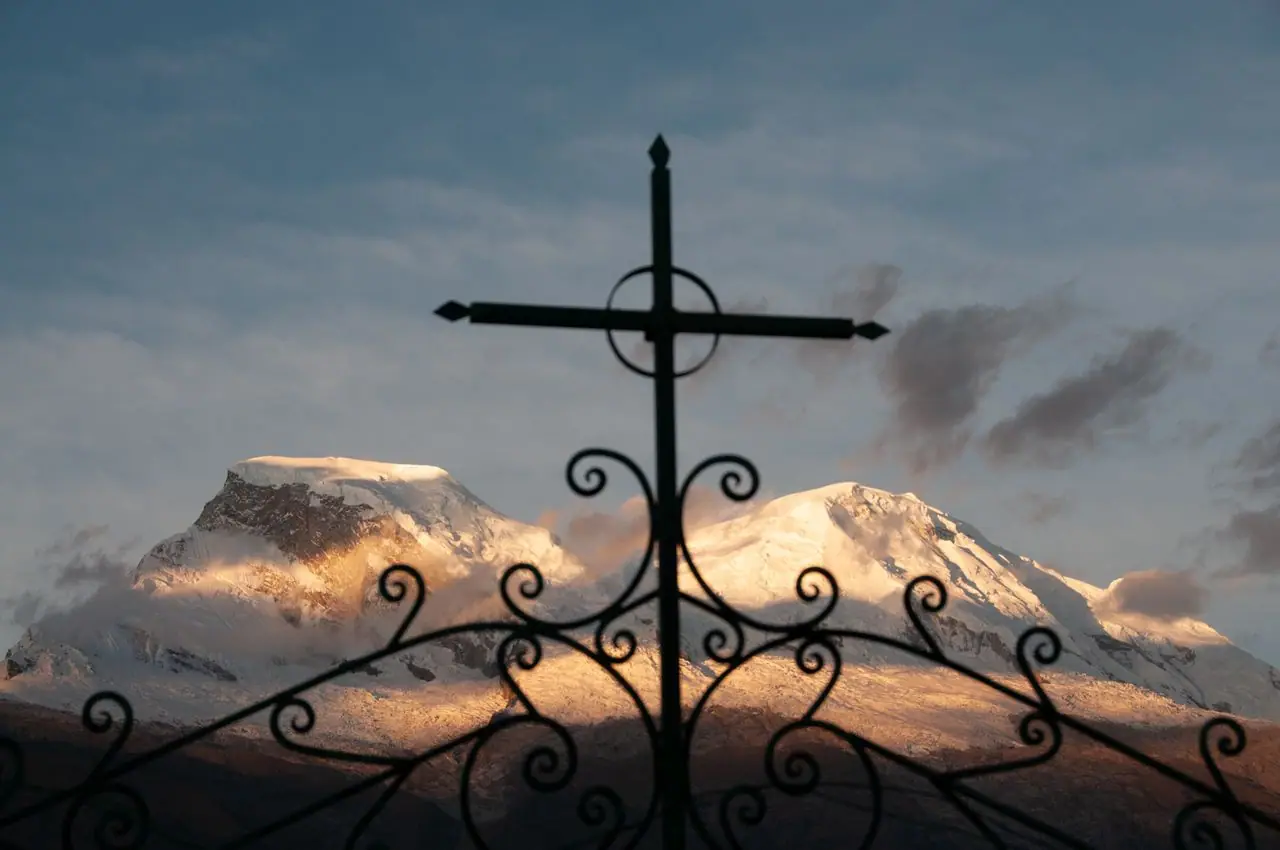
Yungay lies in the Callejón de Huaylas, at about 2,400 metres, with Huascarán —the highest peak in Peru, at 6,768 metres— as its neighbour. For centuries it was a land of farmers, of orchards, of flower fields and of the road to the lakes of the mountain range.
The town's history is tied to important milestones. On 20 January 1839 the Battle of Yungay was fought here, which sealed the end of the Peru-Bolivian Confederation. The town that existed in the mid-twentieth century was an active community, with a square, church, market, schools and a lively social life, at the foot of the mountain. For those who knew it, it was a cheerful town.
That mountain, however, had already announced its power. On 10 January 1962, a break-off of ice from Huascarán buried the neighbouring town of Ranrahirca and other hamlets, with a toll of between about 3,500 and 4,000 dead, depending on the sources. That first avalanche left a warning of what could happen in a valley surrounded by glaciers.
31 May 1970
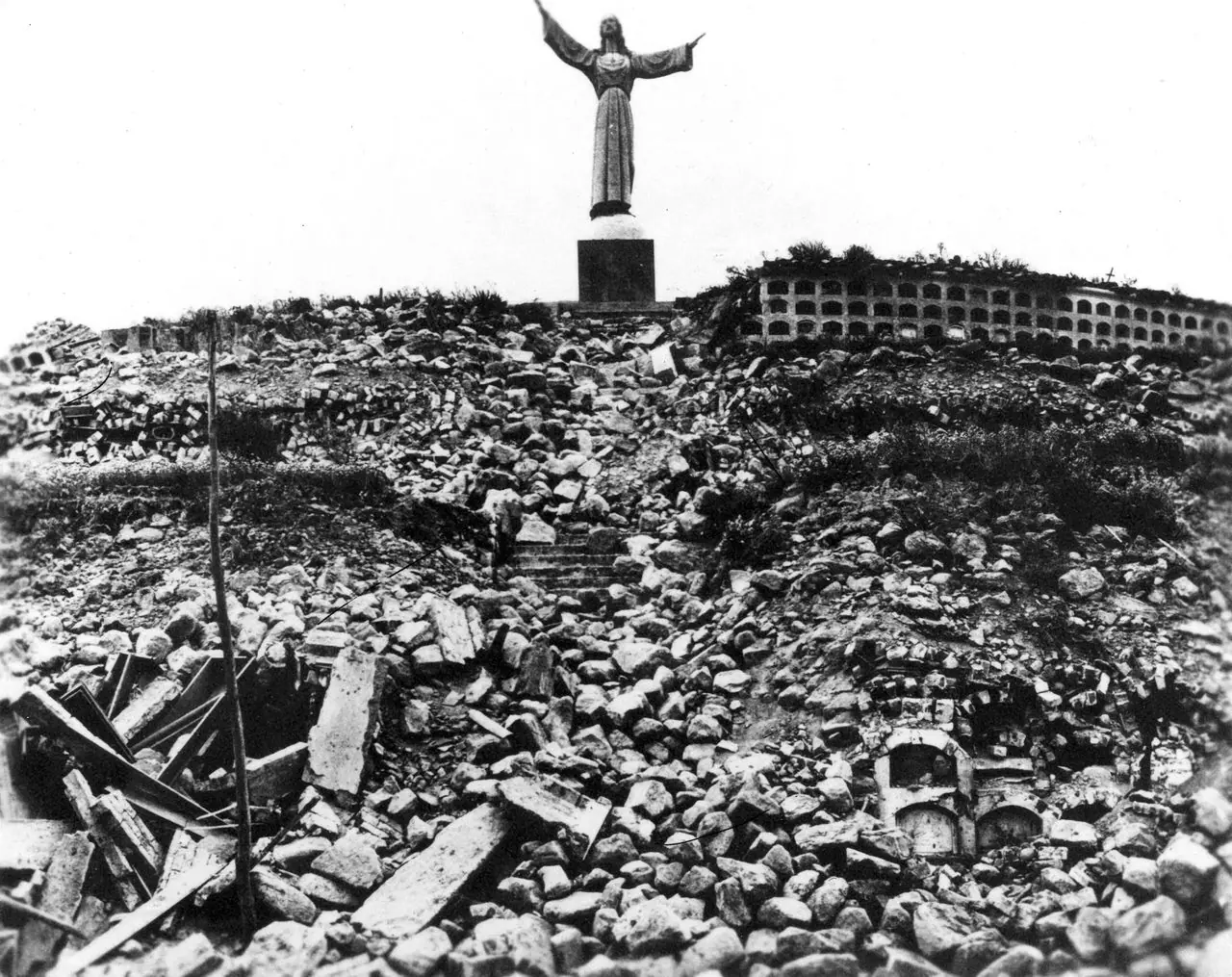
On the afternoon of 31 May 1970, a magnitude 7.9 earthquake shook the coast and highlands of Peru. The tremors dislodged an enormous mass of ice, rock and mud from the north face of Huascarán. That mass, which began to descend at great speed down the valley, crossed the gorge and, within minutes, reached Ranrahirca and Yungay. An article by the Andina agency described it as the three terrible minutes that buried the town.
The figures
The exact figures vary by source:
- For the whole country, the earthquake and its consequences are associated with between 50,000 and 70,000 victims, making it the worst natural tragedy in the history of Peru.
- In Yungay, about 20,000 people are said to have died. The previous population is cited as between 20,000 and 25,000 inhabitants.
- The survivors of Yungay were only a few hundred. Sources mention between 300 and nearly 400 people.
Who survived
Most of the survivors were in high places: in the cemetery, on a hill, or in the stadium. A group of children attending a circus performance was also saved and, according to testimonies, was led to higher ground thanks to a warning. Among the survivors is the seismologist Mateo Casaverde, who took refuge with visitors in the cemetery and described seeing an enormous layer of mud heading towards the town.
What was left standing
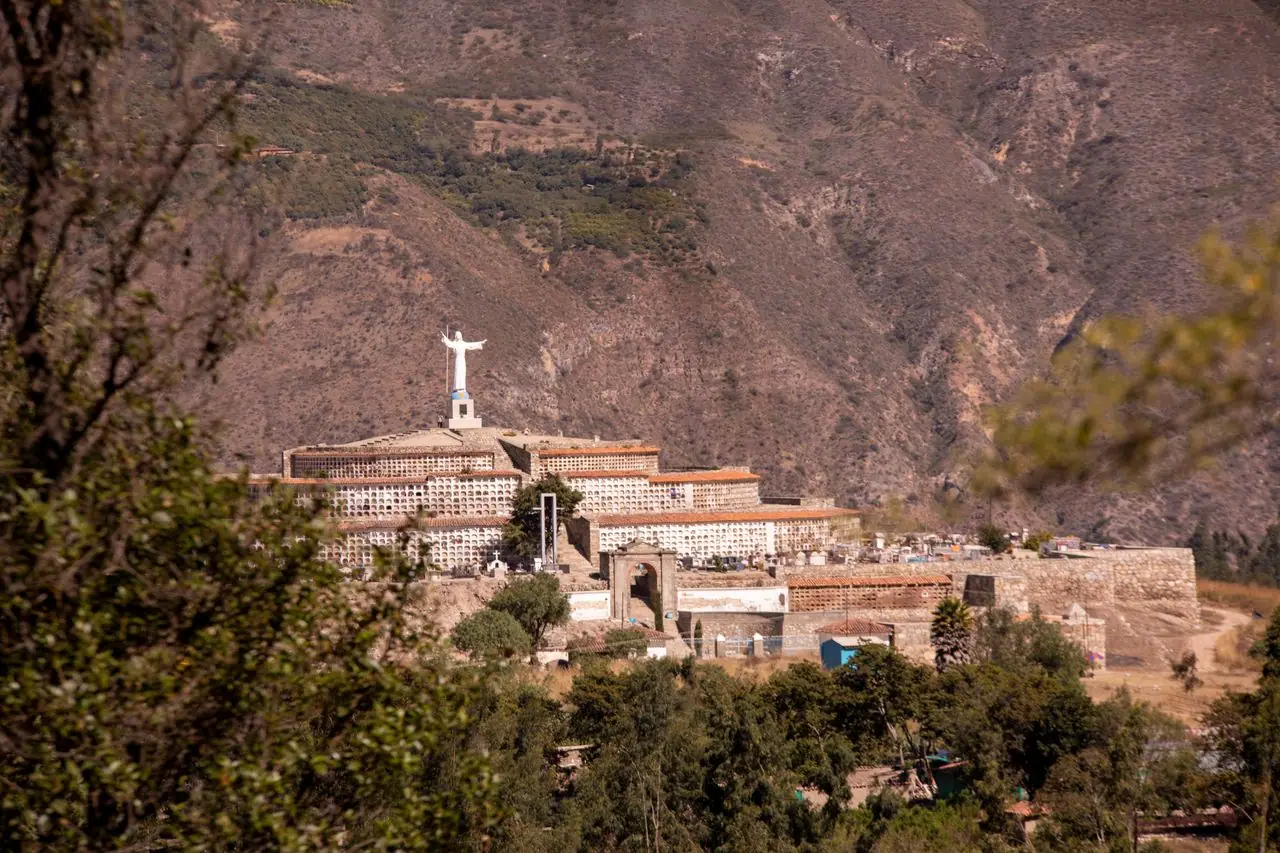
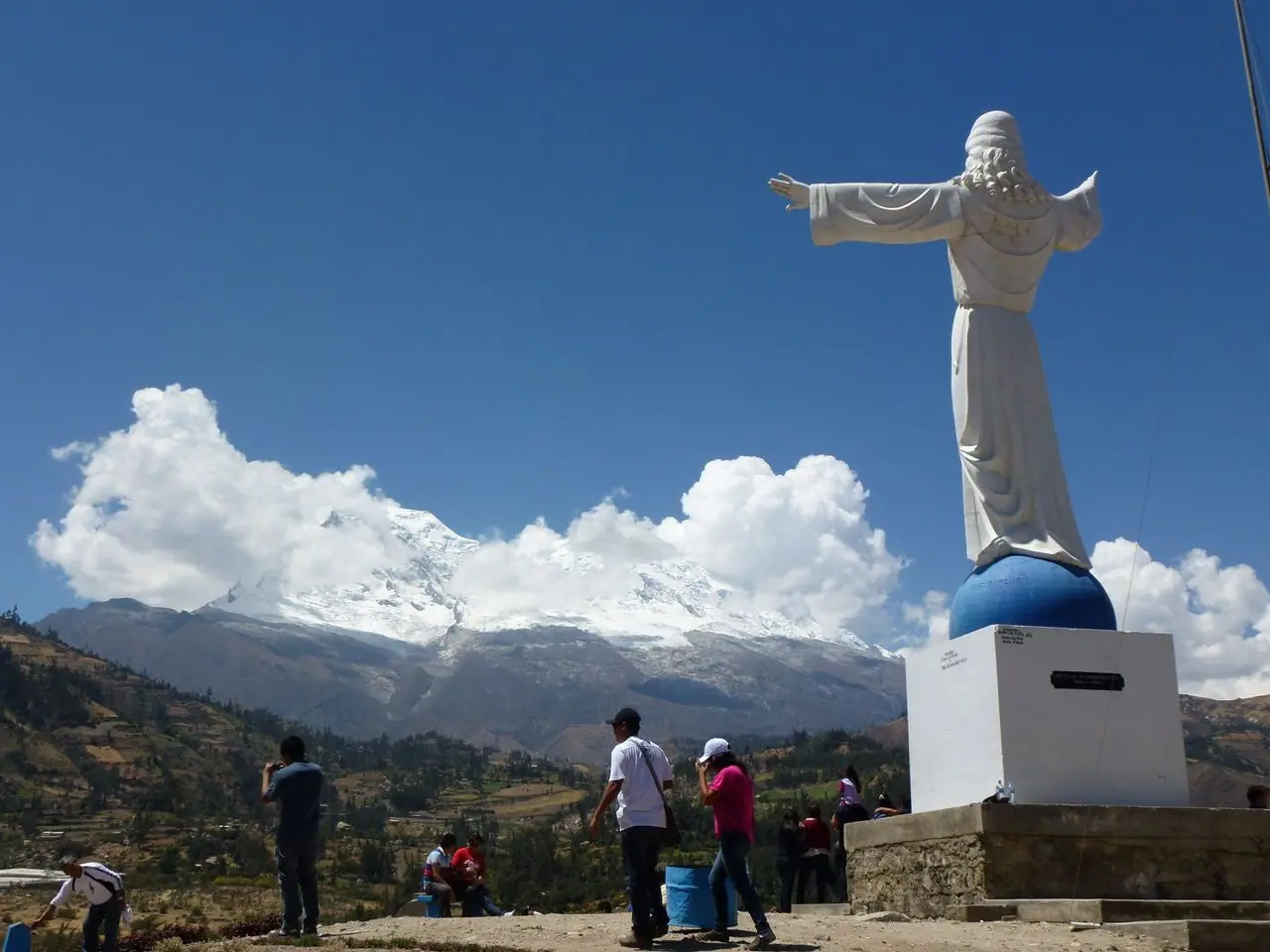
Of the town, only the upper part of the cemetery and four palm trees from the old Plaza de Armas remained standing. On the cemetery hill, some time later, the image of the Christ the Redeemer with open arms was raised, and today it can be seen from a good part of the valley. Other traces that appear in visitors' accounts are the tops of palm trees emerging from the ground, the remains of a bus and parts of a church, as well as a replica of the façade of the old cathedral on the site of the original square.
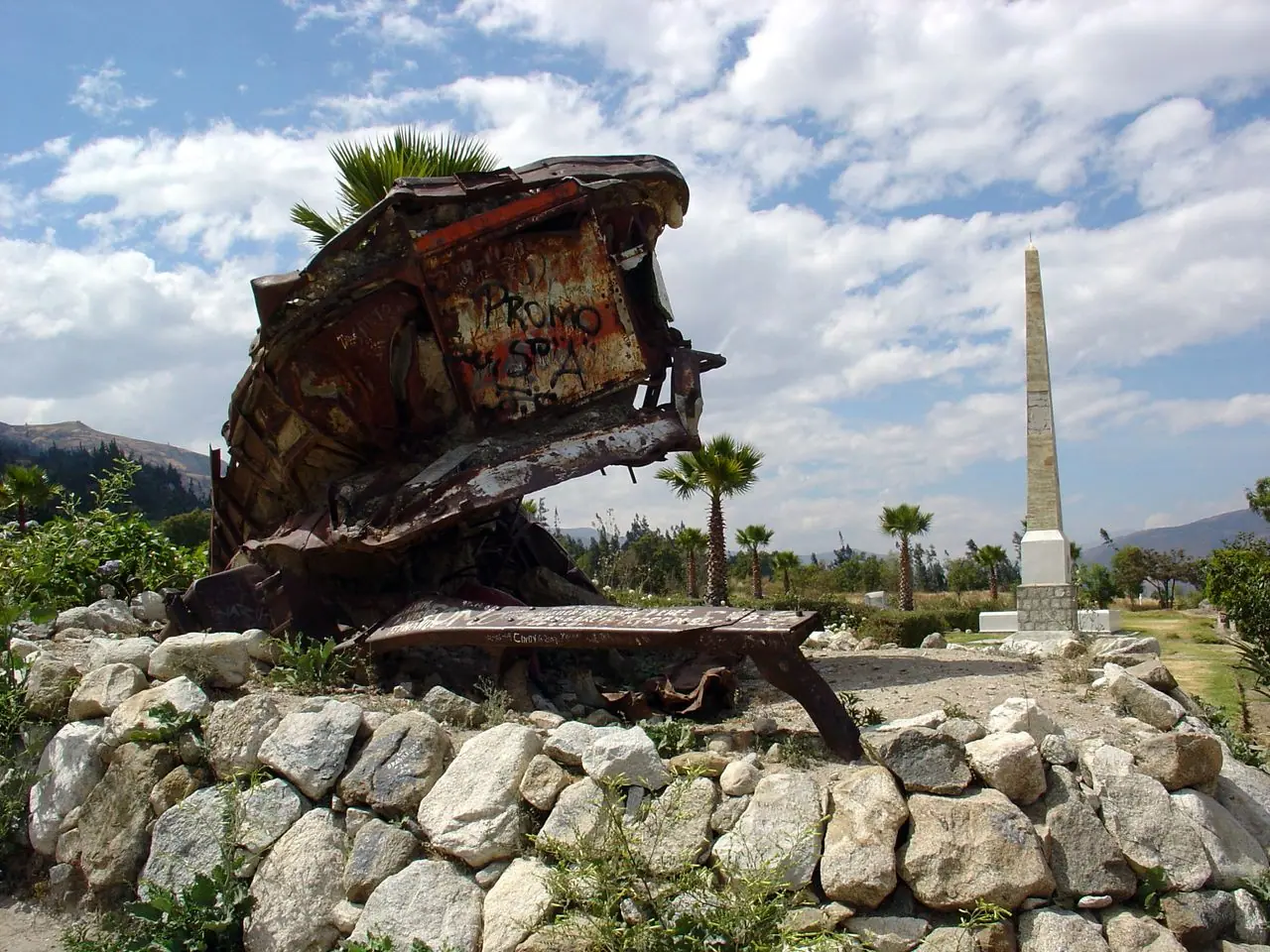
That whole site, known for years as a cemetery, is today the Campo Santo de Yungay: a place of mourning and collective memory, and also a warning about the power of nature.
New Yungay
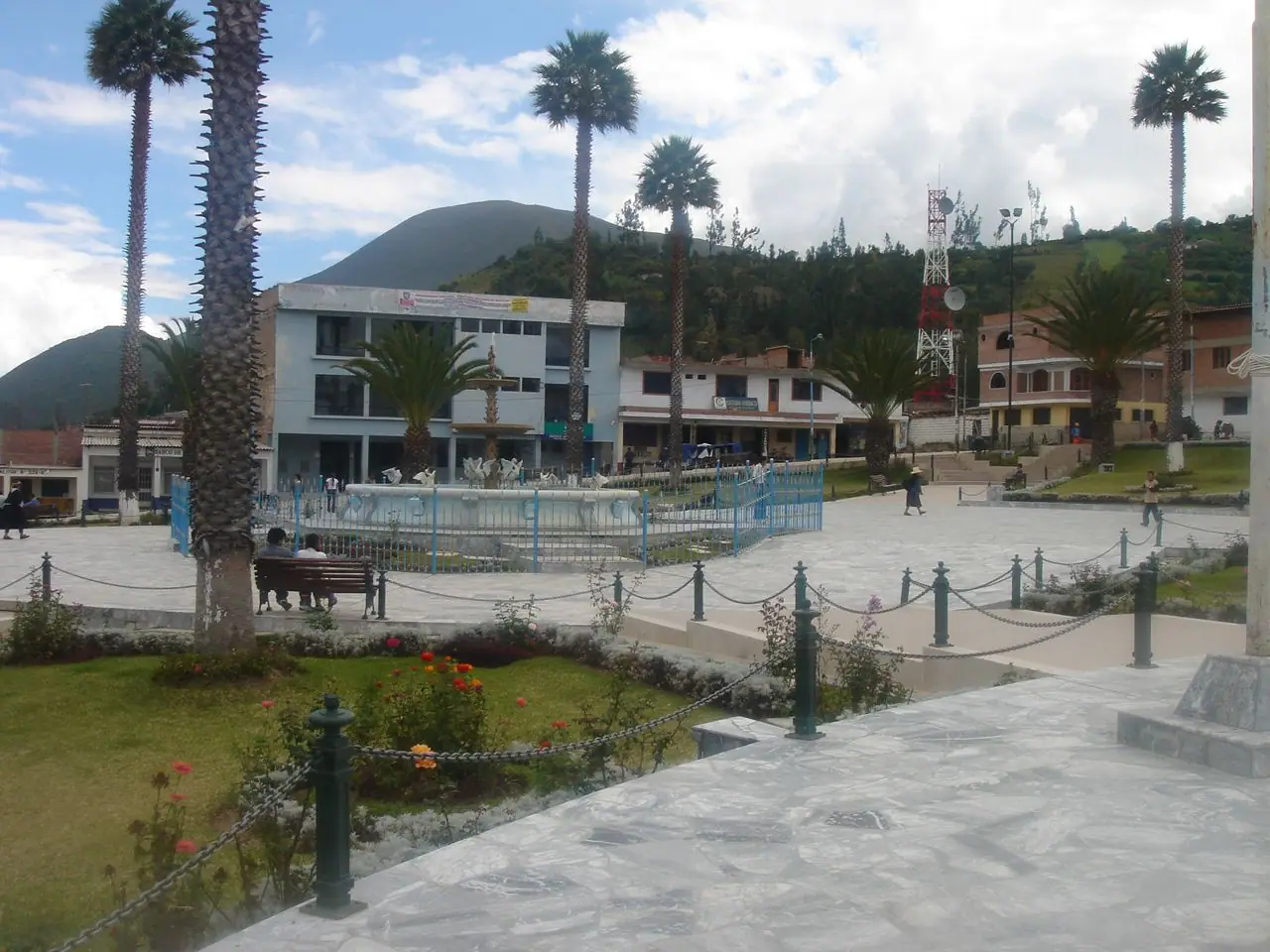
After the tragedy, the survivors and the authorities decided not to rebuild on the same spot. The new town was built a short distance away —sources mention around 1.5 kilometres from the cemetery—, in a place considered safer. It was planned with wide streets and views of the Cordillera Blanca. In time, the square, the market, the schools and the orchards returned; and with them, everyday joy.
The tragedy also had consequences for the whole country: it prompted the creation of the National Civil Defence System, forerunner of the present disaster risk management system. In that sense, the story of Yungay is also a story about how a country learns to protect itself.
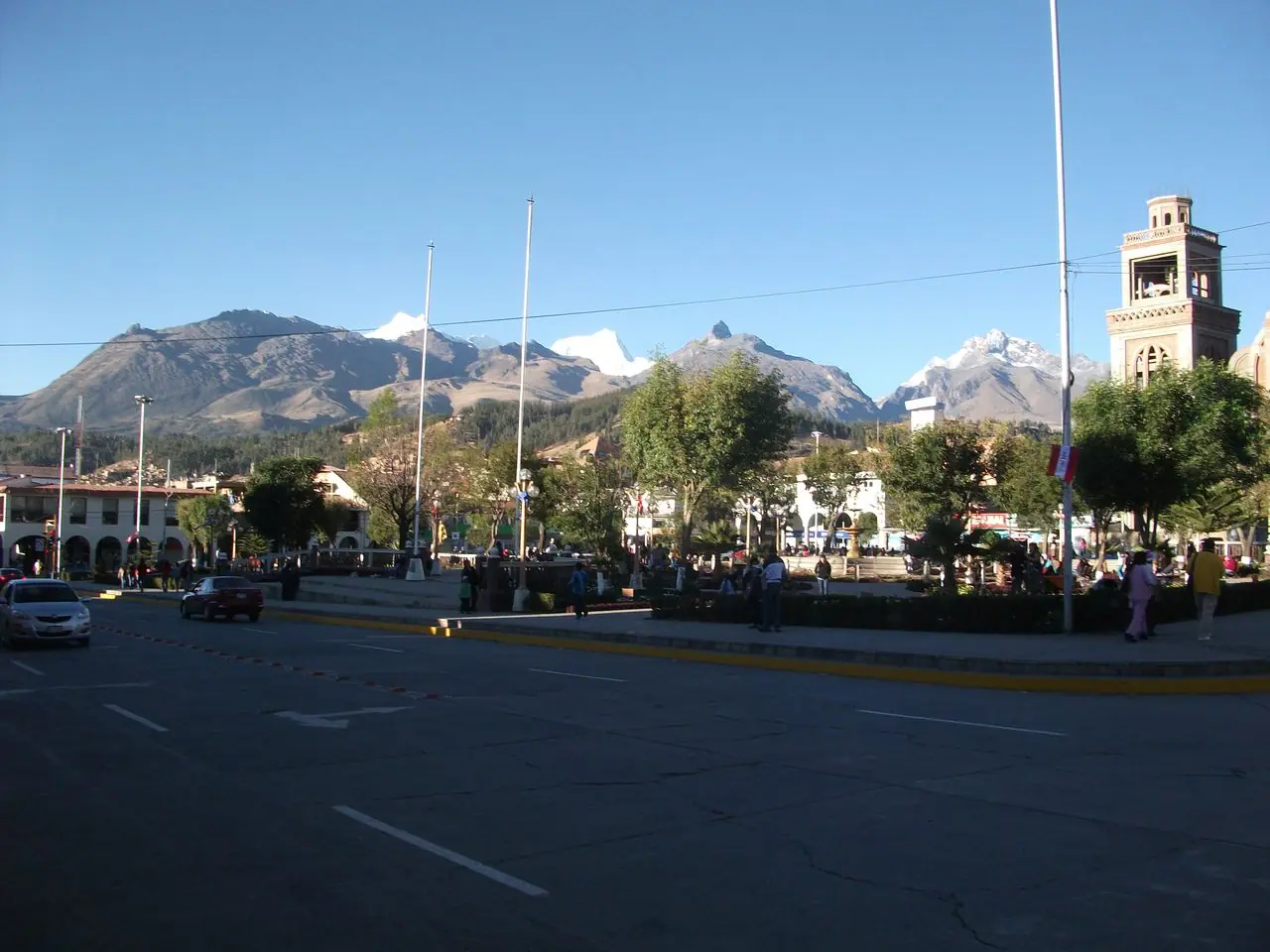
Today Yungay is a quiet town of squares, market and flowers, with a population that has known how to rebuild its life without forgetting what happened. That resilience is part of its identity. Talking with the people of Yungay, walking around the square and visiting the Campo Santo helps one understand that memory and everyday life can coexist.
How to visit the Campo Santo de Yungay
Location and how to get there
The Campo Santo is very close to the present-day town. You can get there by taxi or mototaxi in a few minutes, or combine it with a walk from the square. Ask in the square, at your accommodation or at the local terminal about the best way to go that day.
Opening hours and entrance
Some guides mention opening hours of roughly eight in the morning to five in the afternoon and a very low entrance fee, but no official source confirms this as current. Check the hours and the fee before you go, by asking locally.
How much time to allow
A quiet visit takes between one and two hours. If you want to read the signs, climb up to the Christ and walk the gardens without hurrying, set aside generous time. A local guide can greatly enrich the experience with stories and facts about the place.
What to bring
Comfortable footwear, water, sunscreen, a hat or cap and a light jacket. Radiation at this altitude is high even on cloudy days.
How to behave
The Campo Santo is a cemetery where thousands of people rest, and many families visit it to remember their loved ones. Some simple guidelines:
- Speak in a low voice and walk calmly.
- Avoid jokes, disrespectful selfies and music.
- Ask permission before photographing other people.
- Do not climb on structures, take objects or move offerings.
- If you see a family in a private moment, keep your distance.
- Leave the place as you found it.
When to go
In the afternoon, with soft light, is usually an especially evocative time; in the morning, the clearer air lets you see the mountain range better. Avoid days of heavy rain, when access can become difficult.
How to combine the visit with other plans
The Campo Santo combines well with a walk around the square, a home-cooked meal at the market and a visit to the viewpoint. If you have little time, it is one of the most meaningful visits in Yungay. If you have two or three days, plan it for the first day, calmly, to acclimatise before going up to Llanganuco. A complete outline is in the 3-day itinerary in Yungay and more ideas in things to do in Yungay.
Where to stay to visit the Campo Santo
At Comtury Lodge we are about eight minutes on foot from the Plaza de Armas, at Jirón 2 de Mayo 1019, inside a botanical garden with a view of the Cordillera Blanca. It is a quiet place to come back to after a visit that often leaves many travellers thoughtful: there are gardens, hammocks, a bonfire and spaces for silence. Learn more on our story page and in the guide to accommodation in Yungay.
What Peru learned from Yungay
The magnitude of the 1970 tragedy forced the country to rethink how it prepares for disasters. In the following years a national civil defence system was organised and, over time, capabilities were developed for monitoring glaciers and mountain lakes in Áncash, which today make it possible to watch for risks that were once almost invisible. That effort, which has gradually evolved into the present approach to disaster risk management, was born from the pain of what happened.
For those who travel to the Callejón de Huaylas, that legacy has a practical reading: respect the warnings of the authorities, find out about the weather and the state of the routes before heading into the mountains, and understand that the landscape we admire is also a dynamic territory. If you go out hiking or to visit the glaciers, check the alerts and follow the instructions of guides and park rangers.
How to talk about this history with children and teenagers
Visiting the Campo Santo with young people can be an educational opportunity if done with sensitivity. Some ideas:
- Prepare the visit. Before arriving, tell them in simple words what happened and why the place is special.
- Set the tone in advance. Explain that it is a place of respect, where people speak softly and walk calmly.
- Answer honestly. If they ask, answer clearly and without dramatising; it is fine to say that it was very sad.
- Look for meaning. Talk about the resilience of the people, the rebuilding and the importance of looking after one another.
- Close with a space of calm. After the visit, a while in a garden, a quiet snack or a gentle walk helps to process what has been experienced.
Oral memory: when the people of Yungay tell their story
Beyond the signs and the facts, the memory of Yungay is passed on in the voices of those who lived it or inherited it from their families. In the square, at the market or at a table of home cooking, it is common for an everyday conversation to turn into an account of those days, of the survivors or of what it meant to start again. Listening with respect, without interrupting or asking for details, is one of the most valuable ways to learn. If someone decides to tell you their story, thank them and consider it a gift.
Sources and figures
The facts in this article come from reports published by the Andina agency and by Infobae, and from historical accounts of the Battle of Yungay. The figures for victims and survivors vary between sources; that is why we present them as ranges. If you have verified information you would like to share, write to us: we care that this article remains faithful to the memory of the place.
Frequently asked questions about the Campo Santo de Yungay and the 1970 earthquake
What happened in Yungay in 1970?
On 31 May 1970, a magnitude 7.9 earthquake dislodged a mass of ice, rock and mud from Huascarán that buried the old town of Yungay and the village of Ranrahirca within minutes.
How many people died?
The figures vary. Between 50,000 and 70,000 victims are mentioned across the country and about 20,000 in Yungay. Only a few hundred people from Yungay survived.
What is the Campo Santo de Yungay?
It is the memorial built on the site of the old town, with gardens, the Christ with open arms and the four palm trees that survived.
What are the four palm trees?
They are the palm trees of the old Plaza de Armas that remained standing after the avalanche and that are today a symbol of the place.
Where is New Yungay?
A short distance from the Campo Santo, around 1.5 kilometres according to the sources, in a place considered safer.
How long does the visit take?
Between one and two hours, depending on your interest and whether you go with a guide.
Can I go with children?
Yes, with sensitivity. It helps to explain the history to them calmly and to ask them for respect at the site.
Are there guides?
There are local guides who can accompany you. Ask on site or at your accommodation.
When is the best time to go?
In the morning or the afternoon, in clear weather, avoiding days of heavy rain.
Conclusion
The Campo Santo de Yungay is not just another tourist attraction: it is a place to remember, to give thanks and to understand better the land we inhabit. Visiting it with respect and with time is one of the best ways to connect with the history of Yungay and with the resilience of its people. If you are planning your trip, write to us through the form or on WhatsApp at +51 943 529 322 and we will welcome you at Comtury Lodge, eight minutes on foot from the square.
Want to live it in person?
Request a stay