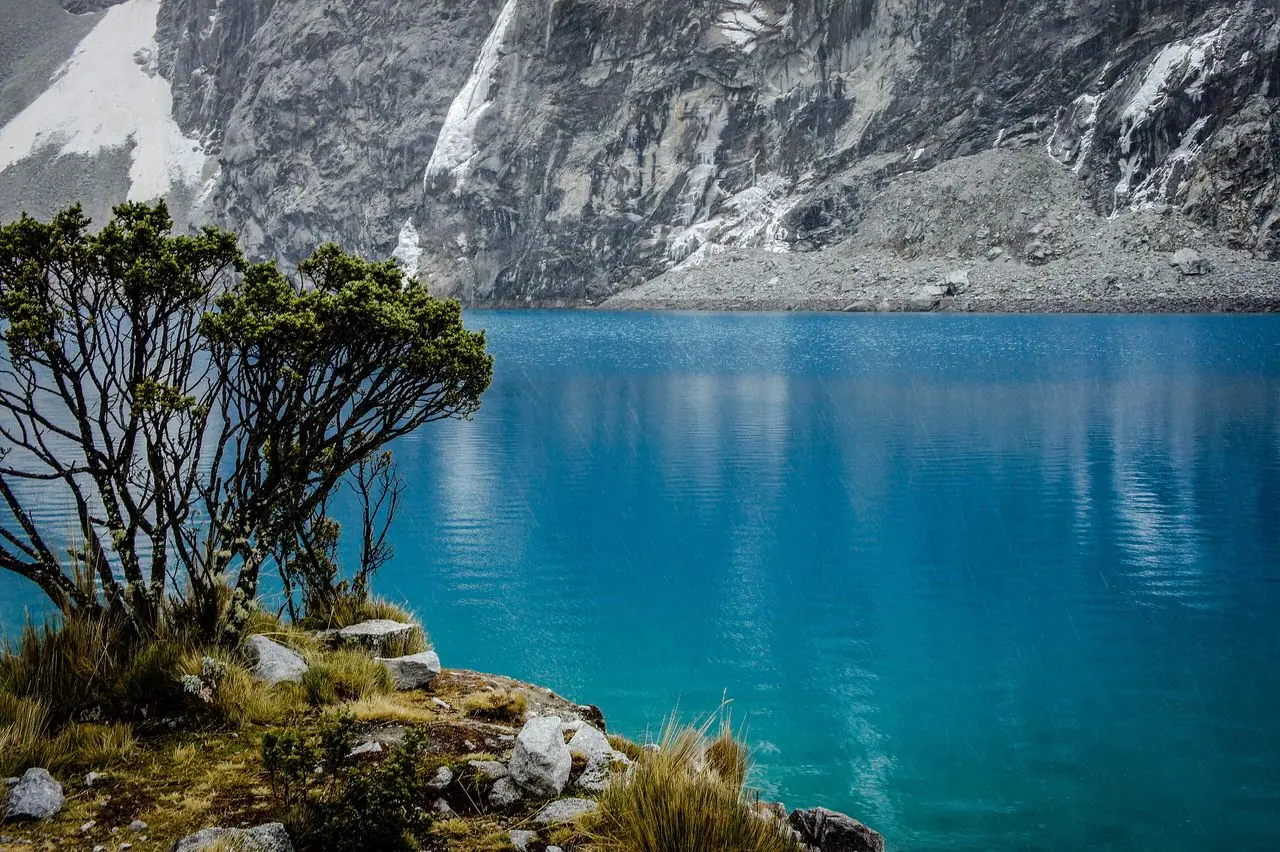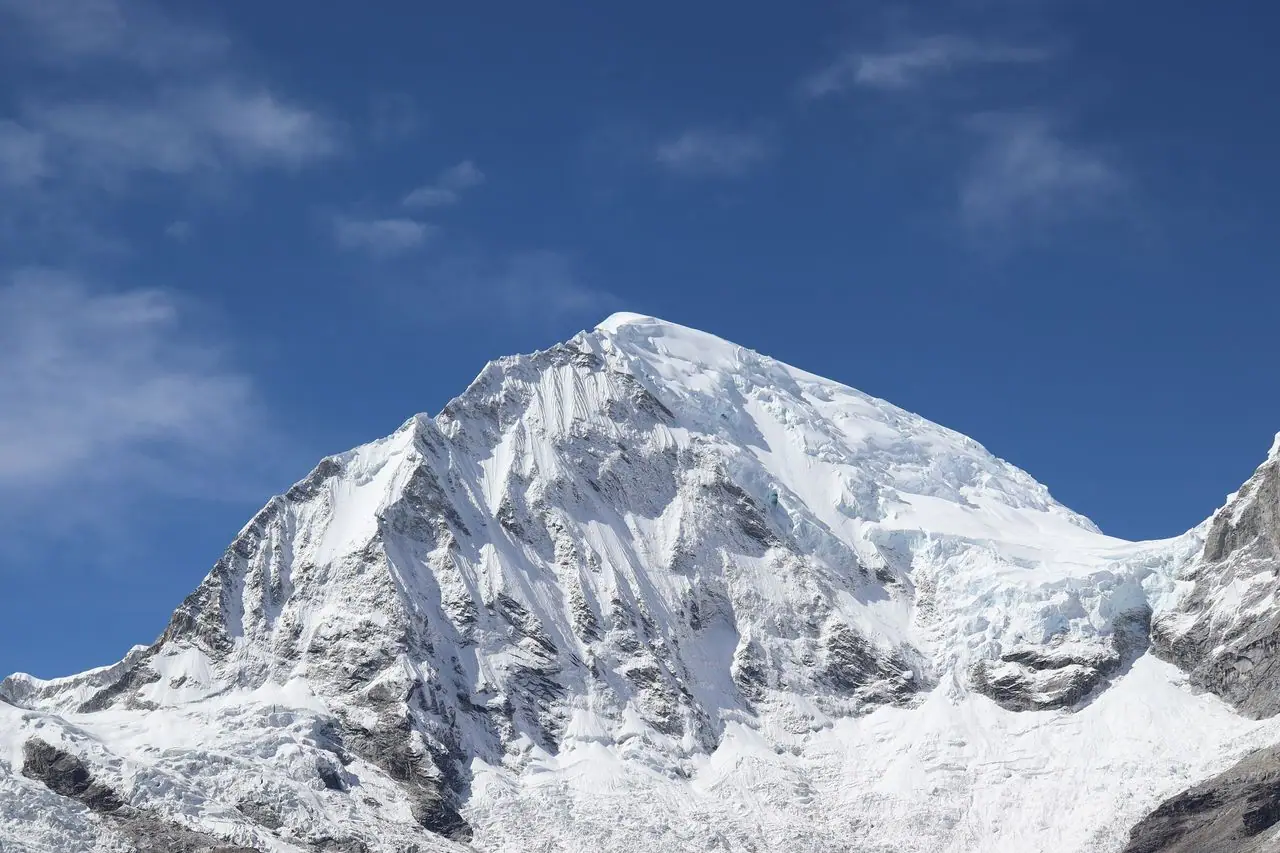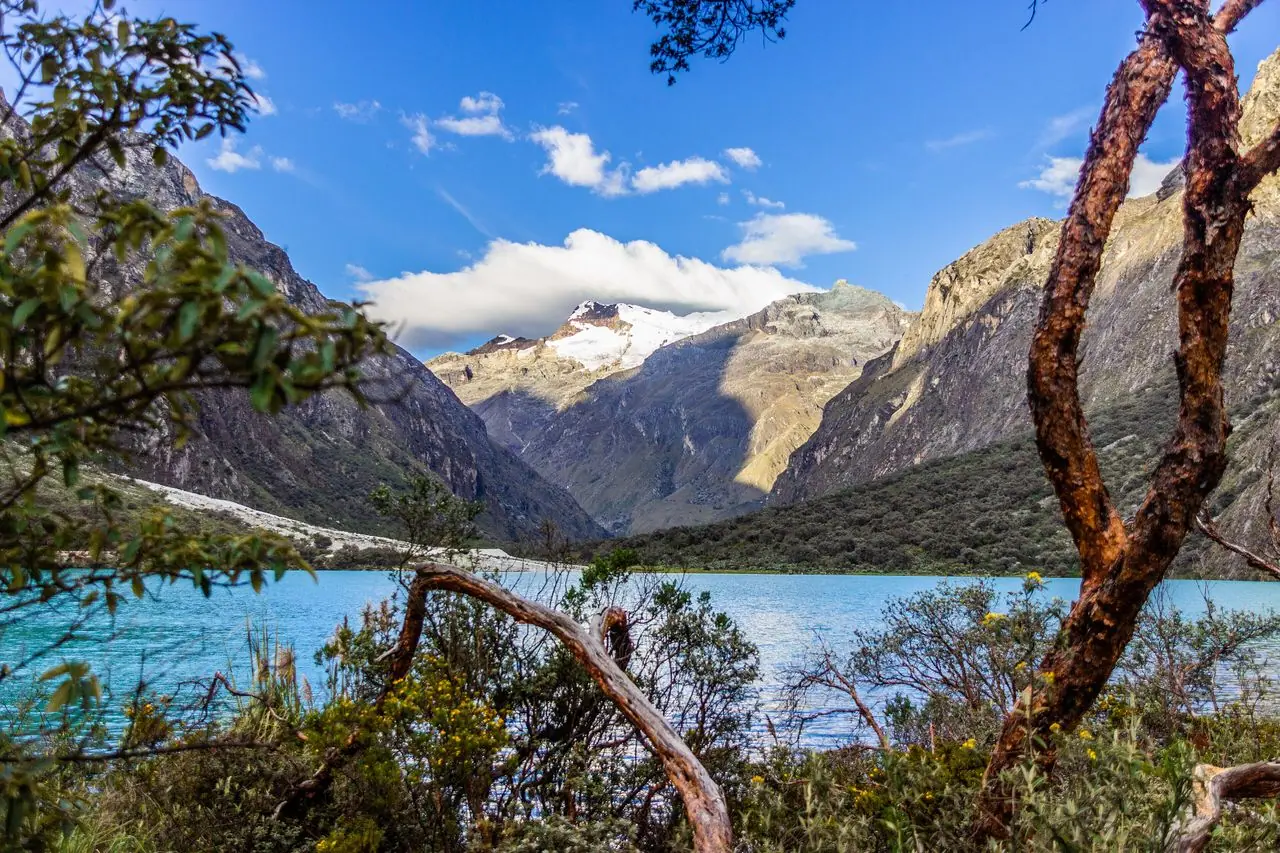
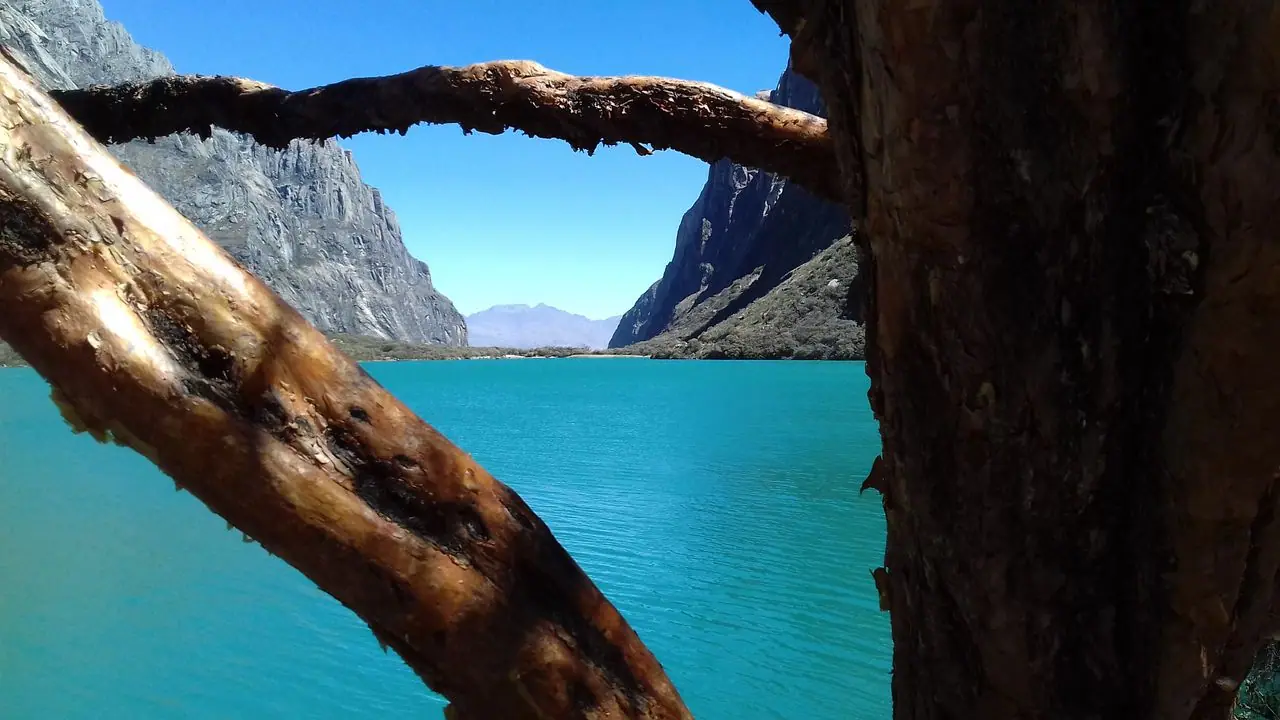
Few postcards from Peru are as surprising as the Llanganuco lakes: two mirrors of turquoise water set between rock walls and glaciers, at almost four thousand metres, with the snow-capped summits of Huascarán and Huandoy rising above the water. They lie within Huascarán National Park, in the department of Áncash, and from Yungay you can reach them on a half-day excursion. In this guide we explain how to get there, how much time you need, how the park ticket works, what to see along the way, what to bring and how to look after yourself at altitude so that the day is memorable for the right reasons.
Key facts. Chinancocha and Orconcocha lakes · about 3,860 m a.s.l. · about 28 km by road from Yungay, mostly unpaved · inside Huascarán National Park · the Chinancocha lake circuit is visited with a park ticket, bought online or at the control posts · best season: the dry season, from May to September, and best time of day: the morning.
What the Llanganuco lakes are
Llanganuco is a valley of glacial origin that opens to the east of Yungay, in the northern sector of the Cordillera Blanca. On the floor of this U-shaped valley lie two lakes: Chinancocha, the larger one and the one visited most often, and Orconcocha, smaller and further inside the valley. According to Andean tradition, the names refer to the feminine and the masculine, although this is better taken as a cultural note than as a rule.
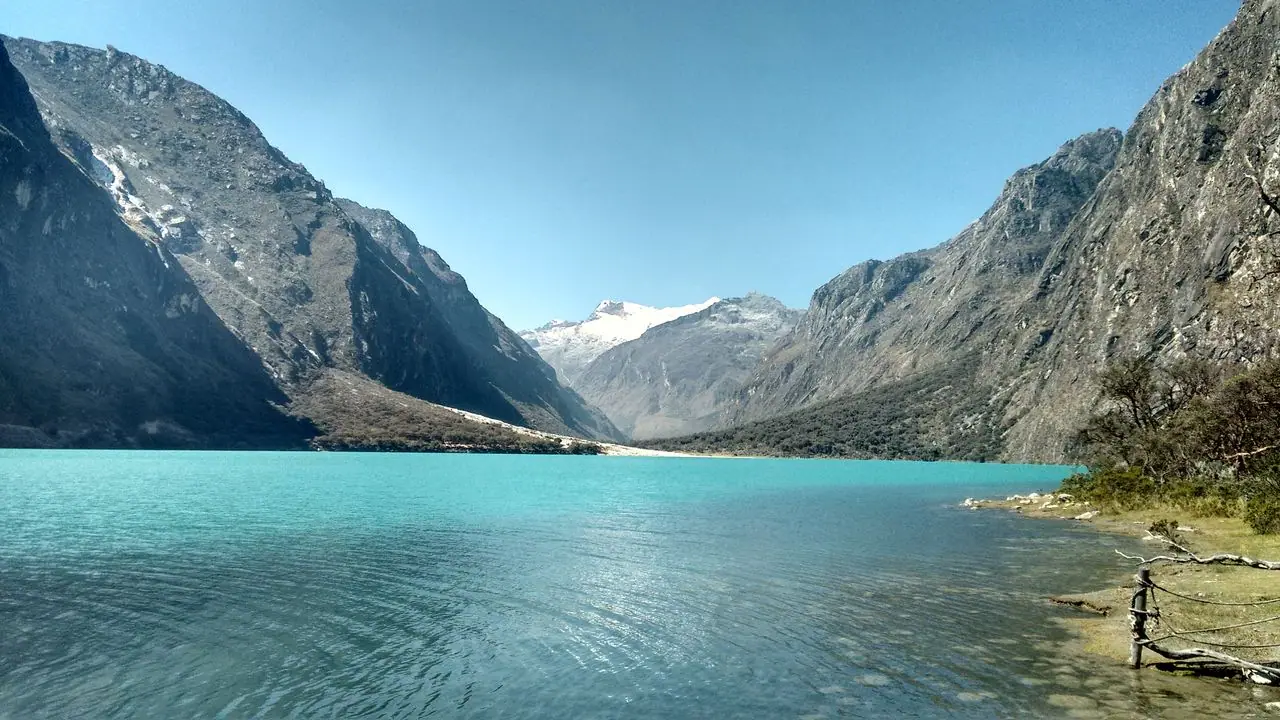
Their turquoise colour comes from the very fine mineral particles carried by meltwater, known as glacial flour, which reflect light in a particular way when the sky is clear. That is why the colour changes with the weather and the time of day: more intense in sunshine, more muted under cloud.
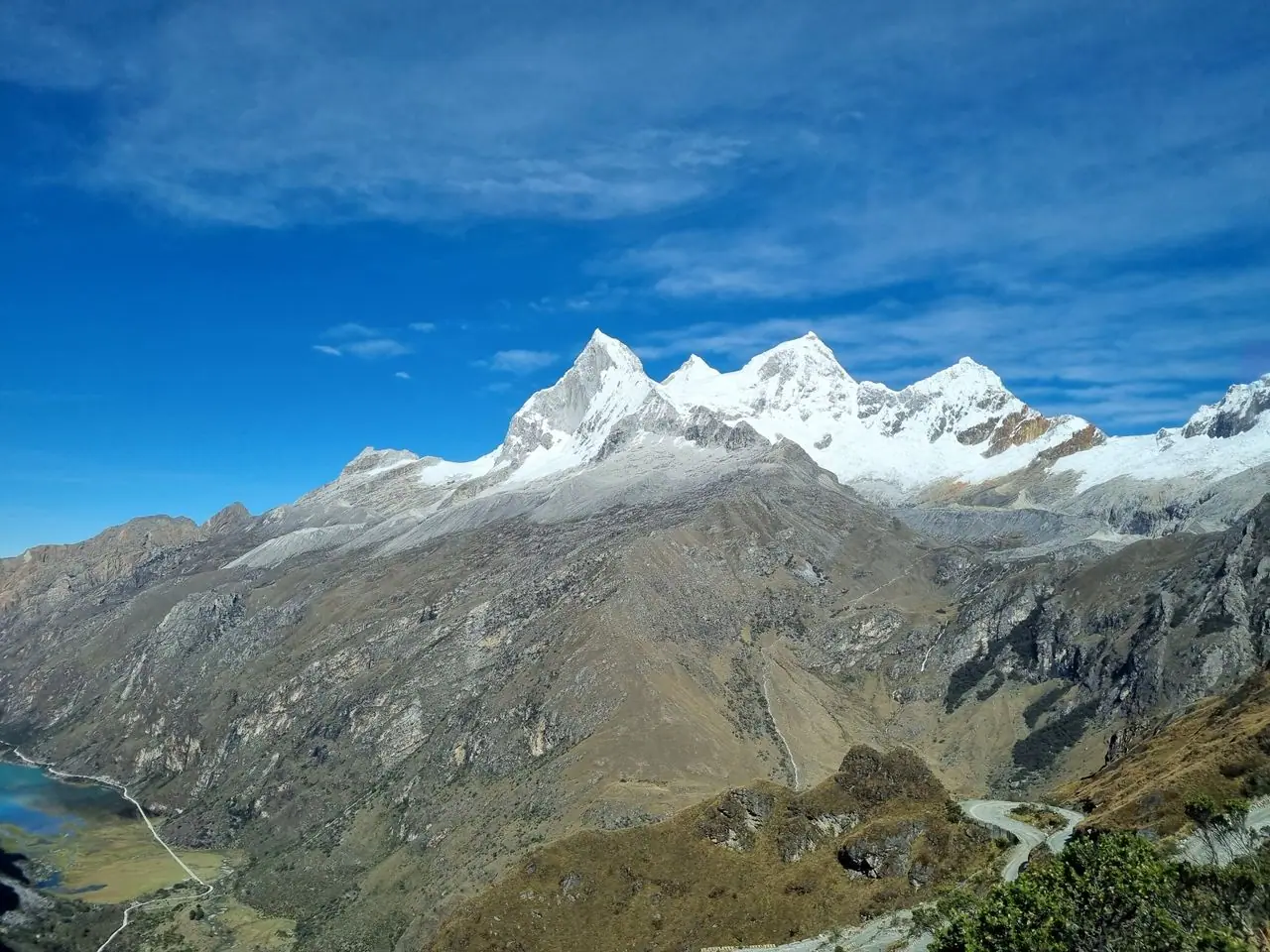
The valley is ringed by some of the highest summits in the range: Huascarán, at 6,768 metres, the highest peak in Peru; Huandoy, at over six thousand; Chopicalqui and Pisco, among others. That combination of lakes at almost four thousand metres and peaks above six thousand is the reason Llanganuco is a classic of the Callejón de Huaylas.
How to get to the Llanganuco lakes from Yungay
Distance and time
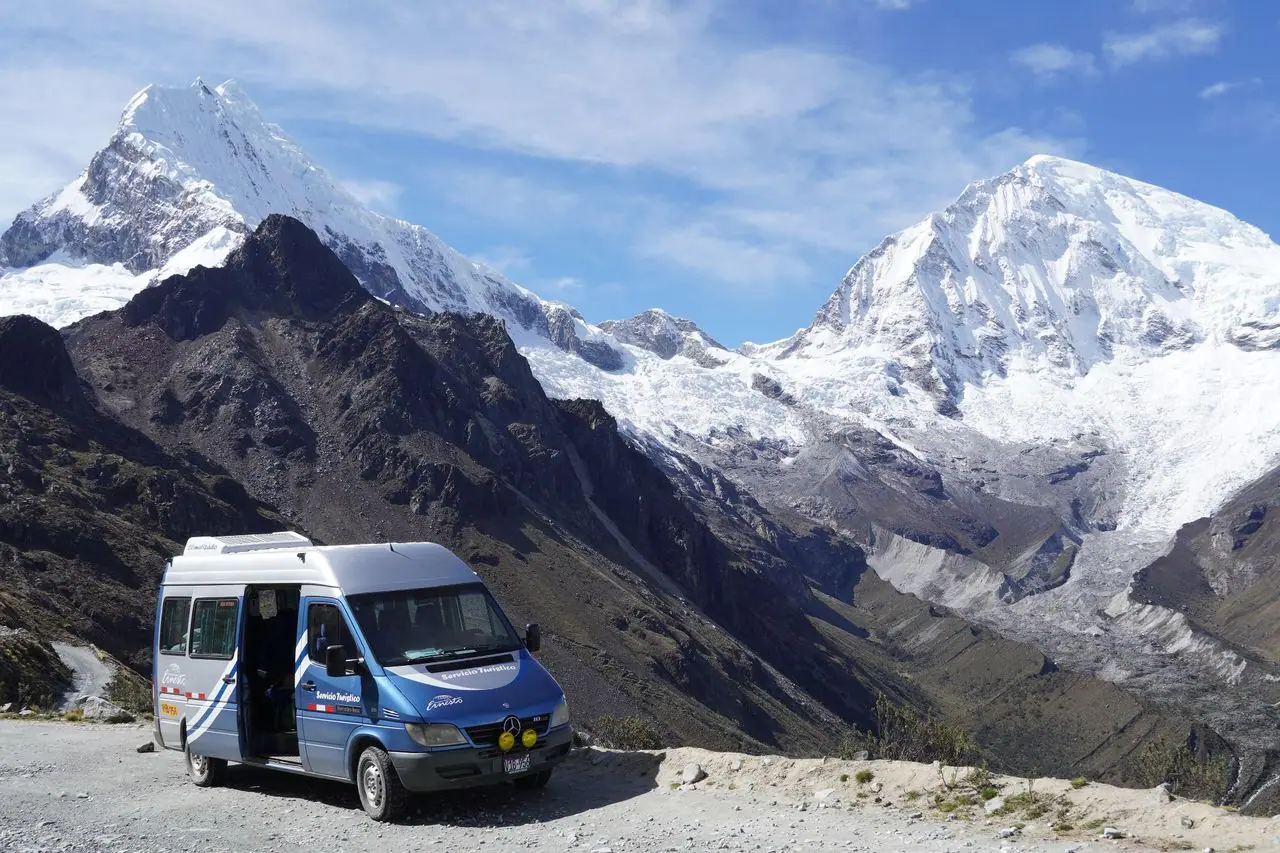
From Yungay, the road to Llanganuco is about 28 kilometres long, mostly unpaved, and climbs more than a thousand metres in zigzags. According to local operators, the journey can take roughly between one hour and one and a half hours, depending on the state of the track, the weather and the vehicle. The climb is part of the appeal: as you gain height, the landscape changes from fields and small farms to queñual woodland, valleys and rock walls.
Transport options
- Hired taxi. This is the most comfortable and flexible option. You ask for a round-trip service and agree on the waiting time at the lakes and the price before setting out. It is a good option for groups or families.
- Colectivo (shared taxi). In season, colectivos leave from the area of the Yungay terminal for the lakes and return after a waiting period. It is cheaper, but with less predictable timetables. Ask in the square or at your accommodation about the day's departures.
- Agencies and tours. Many agencies in Huaraz and Yungay offer one-day excursions to Llanganuco, sometimes combined with the Campo Santo. Some include a guide and entrance, others do not; confirm what is included.
- Own car. It is possible to arrive in a private vehicle, driving carefully along the dirt track. If your vehicle is low or does not have good traction, ask about road conditions first. In the rainy season there can be landslides.
- On foot or by bicycle. Only for people who are very well prepared and acclimatised, since it involves a steep climb and many kilometres on a track with traffic.
When to set out
Leave early. In the morning the sky is usually clearer and the lakes show their colour at its best; clouds tend to cover the summits towards midday and in the afternoon, especially in the rainy season. A reasonable schedule is to leave Yungay between 7 and 8 in the morning, reach the lakes mid-morning and be back by mid-afternoon.
The park ticket: how it works
Llanganuco is part of Huascarán National Park, a protected natural area managed by SERNANP. You need a ticket to enter. According to public information from 2026, the Chinancocha lake circuit continues to be sold directly to the visitor, either online on the official SERNANP platform or in person at the control posts.
As a reference, secondary sources report one-day fares of around S/ 12 for adult Peruvians and S/ 30 for foreigners, with discounts for children and free entry for under-fives, as well as fares for more days. These are reference values that can change: always confirm them on the official SERNANP platform before you travel.
Two important clarifications:
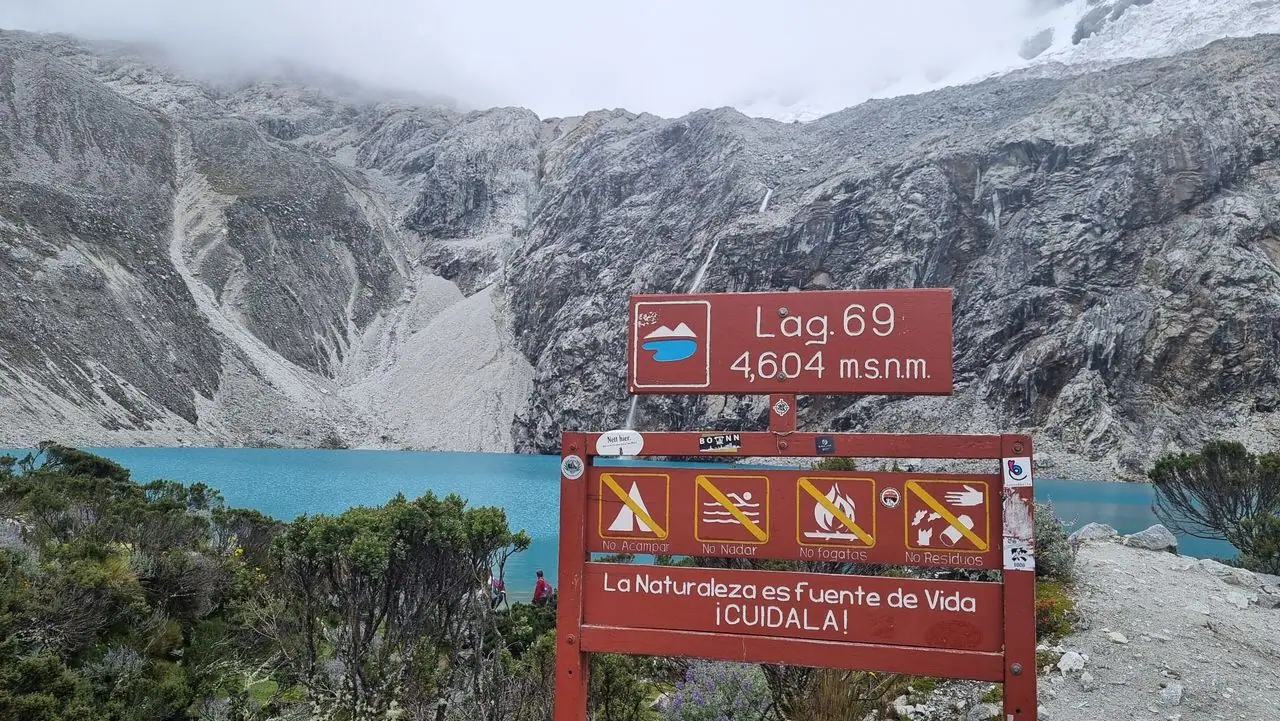
- Some circuits in the park, such as Laguna 69 and the Pisco snow-capped peak, have different rules: since 2026 they can only be visited with authorised agencies. That is not the case for the Chinancocha circuit. Details in our Laguna 69 guide.
- Bring your ID document and keep your ticket throughout the visit; you may be asked for it at the control.
What to see and do in Llanganuco
Viewpoint and shore of Chinancocha
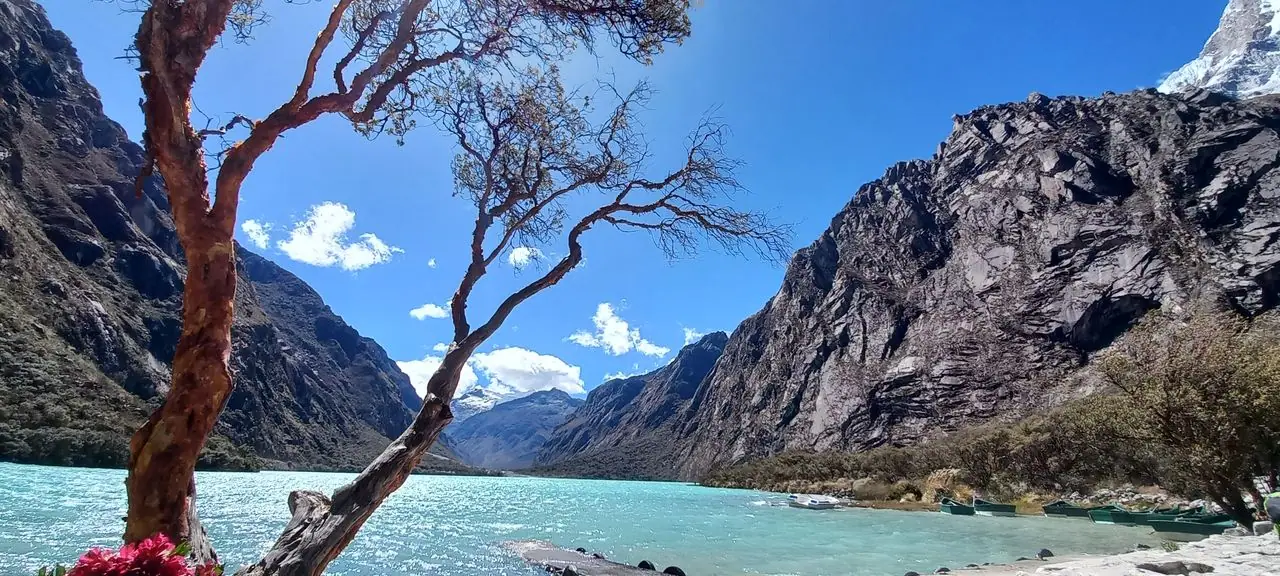
The main stop is the shore of Chinancocha, where there is a rest area, short paths and spots for photographs. On a clear day, the water mirrors the summits. It is a good place to walk calmly, sit and look, and breathe at altitude.
A stroll along the short paths
Around the lakes there are short, accessible paths. They need no technique, but at almost four thousand metres any slope feels steeper. Walk slowly, take breaks and drink water often.
Boat rides
At certain times of year boat rides are offered on the lake. Ask on site about availability, safety and the fare.
Orconcocha
If time and conditions allow, it is worth going on to Orconcocha. The valley becomes narrower and the landscape more imposing.
Portachuelo de Llanganuco
Higher up the valley, the road continues to the Portachuelo pass, at about 4,750 metres according to various sources, one of the highest points reached by vehicle in the area, with views to both sides of the range. It is a spectacular climb, but the altitude is considerable: if you are not acclimatised, avoid staying up there for long and descend if you feel unwell.
Watching flora and fauna
Along the way it is common to see queñual trees and high-altitude vegetation, birds and, with luck, other species that belong to the park. Respect nature: do not approach the animals, and do not feed them or pick plants.
How much time you need
For a half-day trip, count on: about two hours round trip in transfers (variable), two to three hours at the lakes, and some margin for stops. If you want to explore more, a full day with time at Orconcocha and at the Portachuelo pass is more relaxed. Many travellers combine a morning in Llanganuco with a quiet afternoon in Yungay, the Campo Santo or a garden with hammocks.
Altitude and health: what you should know
The lakes are at about 3,860 m, and Yungay at about 2,450 m. That is a jump of more than a thousand metres in a single morning. To enjoy it without discomfort:
- Spend at least one night in Yungay before you go. Read our guide to altitude sickness and acclimatisation.
- Drink water often, even if you are not thirsty.
- Eat lightly and avoid alcohol.
- Move slowly and avoid unnecessary effort.
- If you feel a strong headache, nausea, dizziness or unusual shortness of breath, rest and descend.
- Consult your doctor before travelling if you have heart, lung or blood pressure conditions.
- It is not recommended for people with certain conditions or for pregnant women without medical advice.
What to bring to Llanganuco
| Item | Why |
|---|---|
| Layered clothing (fleece, windproof) | Temperature changes quickly; it is cold with cloud and wind |
| Hat, gloves and buff | Wind chills the head and hands |
| Sunscreen and sunglasses with UV protection | Radiation at this altitude is high even under cloud |
| Comfortable footwear with good grip | Dirt and stony ground; it may be damp |
| Water (1 to 2 litres) and snacks | There is little on offer and the altitude is tiring |
| Park ticket and ID | The controls may ask for them |
| Cash in soles | For the taxi, tips and small purchases |
| Bag for your rubbish | What you bring, you take back |
| Camera or phone with battery | Cold reduces battery life; bring a portable charger |
There is a broader list in what to pack for Yungay and the Cordillera Blanca.
Best time to visit Llanganuco
The dry season, from May to September, offers the clearest skies and safer access. In those months there are more visitors, especially in July and August. In the rainy season, between October and April, the track can be more difficult and clouds often cover the mountains, although sometimes the morning dawns clear. More details in best time to visit Yungay and Huaraz.
How to combine Llanganuco with other plans
- With the Campo Santo. You can visit the Campo Santo in the afternoon after Llanganuco, or the day before as a gentle acclimatisation. See Campo Santo de Yungay.
- With an experience in the garden. After a day at altitude, a yoga session, a cooking experience or the harvest make a good contrast.
- With a longer itinerary. If you have three days, see the 3-day itinerary in Yungay.
Caring for the environment
Llanganuco is a fragile ecosystem. To visit it with respect:
- Stay on the paths and do not pick plants or take stones.
- Do not swim in the lakes or throw objects into the water.
- Take your rubbish back with you, including organic waste.
- Avoid excessive noise and respect other visitors.
- Avoid drones unless you hold the necessary authorisations.
- Follow the instructions of the park rangers.
Accommodation near Llanganuco
Staying in Yungay brings you closer to the lakes and saves you the journey from Huaraz. At Comtury Lodge we offer complete, independent bungalows for 2 to more than 16 people, with a private bathroom, a balcony with a view of the Cordillera Blanca, a kitchen for free use, secure parking and gardens with a hammock area. When you come back from the mountain, the bonfire and the rest are part of the plan. We recommend our guide to accommodation in Yungay to help you choose.
Frequently asked questions about the Llanganuco lakes
How high are the Llanganuco lakes?
Both lakes are at about 3,860 metres above sea level, according to various guides.
How long does it take to get there from Yungay?
Around one hour to one and a half hours by vehicle on a road of about 28 km, mostly unpaved. It varies with the state of the track.
Do I need a ticket to enter?
Yes, it is an area of Huascarán National Park. The Chinancocha circuit ticket is bought online or at the control posts. Confirm the current fare with SERNANP.
Can I go to Llanganuco without an agency?
Yes, the Chinancocha circuit can be visited on your own, by taxi, colectivo or your own car. Laguna 69, however, has required an authorised agency since 2026.
What is the best time of day to visit?
The morning, with the clearest sky. In the afternoon clouds tend to form.
Can I swim in the lakes?
No. It is prohibited and harmful to the ecosystem; it can also bring penalties.
Is it suitable for children and older adults?
It is a short visit with low physical demands, but the altitude can have an effect. Consult your doctor or paediatrician and proceed calmly.
What should I do if it rains?
If the weather is very bad, it is better to postpone. If there is only cloud, the landscape is still beautiful; wrap up well and keep your plan flexible.
Are there toilets and restaurants?
Services at the lakes are limited. Bring water and food and check which services are available on the day of your visit.
Conclusion
Llanganuco is one of those visits that justify a trip to Áncash all by themselves. With good acclimatisation, warm clothing, a park ticket and a little planning, the half day you spend in front of those turquoise waters will be one of the most memorable. And if you would like a quiet place to come back and rest, we look forward to welcoming you at Comtury Lodge: write to us through the form or on WhatsApp at +51 943 529 322 and we will help you with the dates and the local logistics.
Cover photo: Apollo · CC BY 2.0 · Wikimedia Commons
Want to live it in person?
Request a stay